Haverford Township’s Roof Permit Addendum
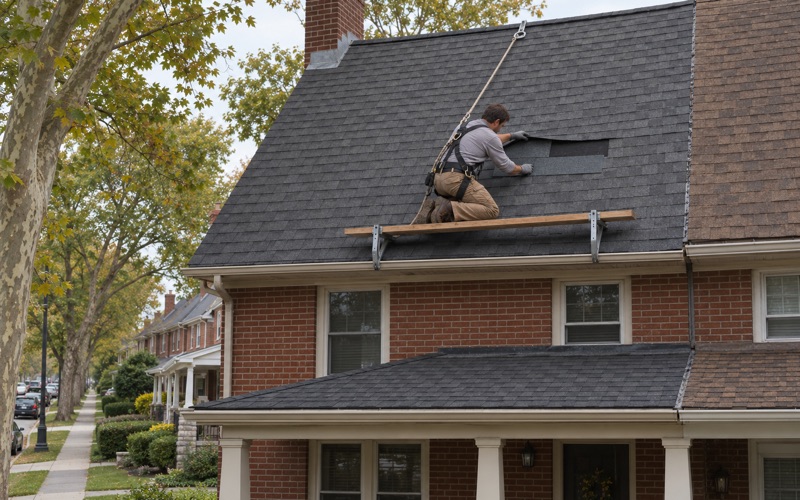
Haverford requires its Roof Permit Application Addendum, version V-02-2025, with every roofing permit application. It caps a roof at two layers of shingles, bars a new roof over wood shake, slate, clay and cement or asbestos-cement tile, and requires a wood shingle roof carrying other roofs to be stripped and re-sheathed.
The 2026 fee schedule prices residential roofing at $20.00 per $1,000 of cost on top of a $100.00 permit fee, and charges double for work begun without a required permit. We complete the addendum with the estimate, so the tear-off decision and the permit cost are on paper before you sign.
Historic Resources and Roof Review
Question 19 of the addendum asks whether the house is in a historic district or on the Historic Resource Inventory. Under Zoning Ordinance Section 182-1302, removing or covering any portion of a roof is listed as demolition of a historic resource, and Section 182-1306 requires a Board of Commissioners permit for it.
The Historical Commission’s own agenda has cited a house whose roof came off without an approved permit. When a house is on the inventory, we build the Historical Commission review into the timeline from the first visit instead of letting it become a stop-work problem.
Re-Roof Permits in Other Pennsylvania Townships
Re-roof permit rules around here are set township by township, so the answer changes the moment you cross a line on the map. Some townships treat every re-roof as permit work, some use a share of the roof area as the trigger, and some add a contractor registration of their own.
We look up the rule for the township your house is actually in before pricing, and the permit fee goes on the estimate as its own line. Lower Merion, which takes in Ardmore and part of Bryn Mawr, uses a roof addendum with the same two-layer cap.
How a Full Tear-Off Runs
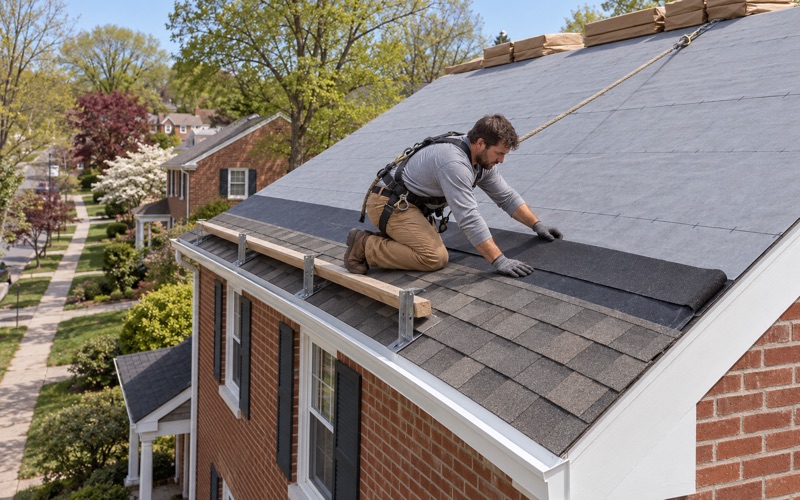
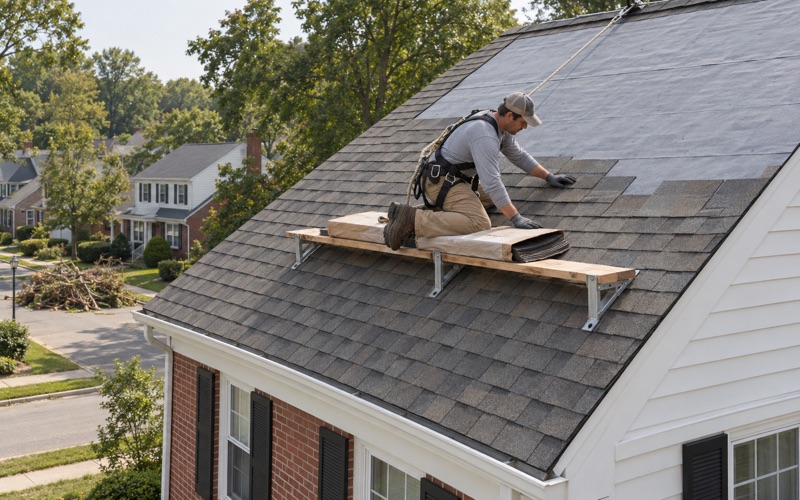
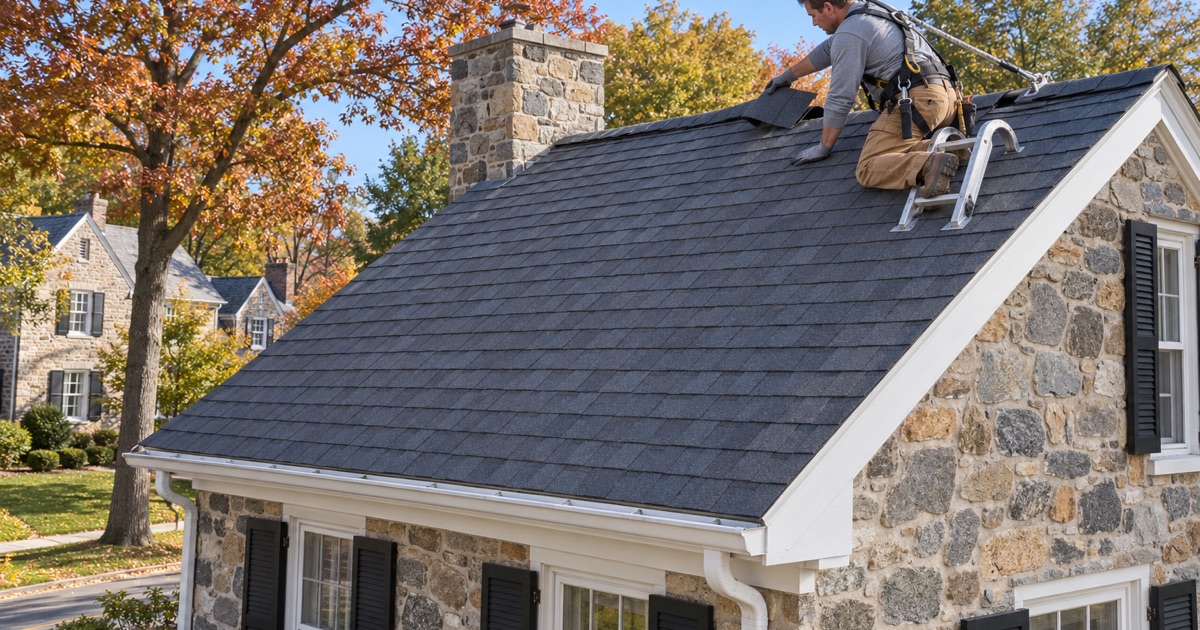
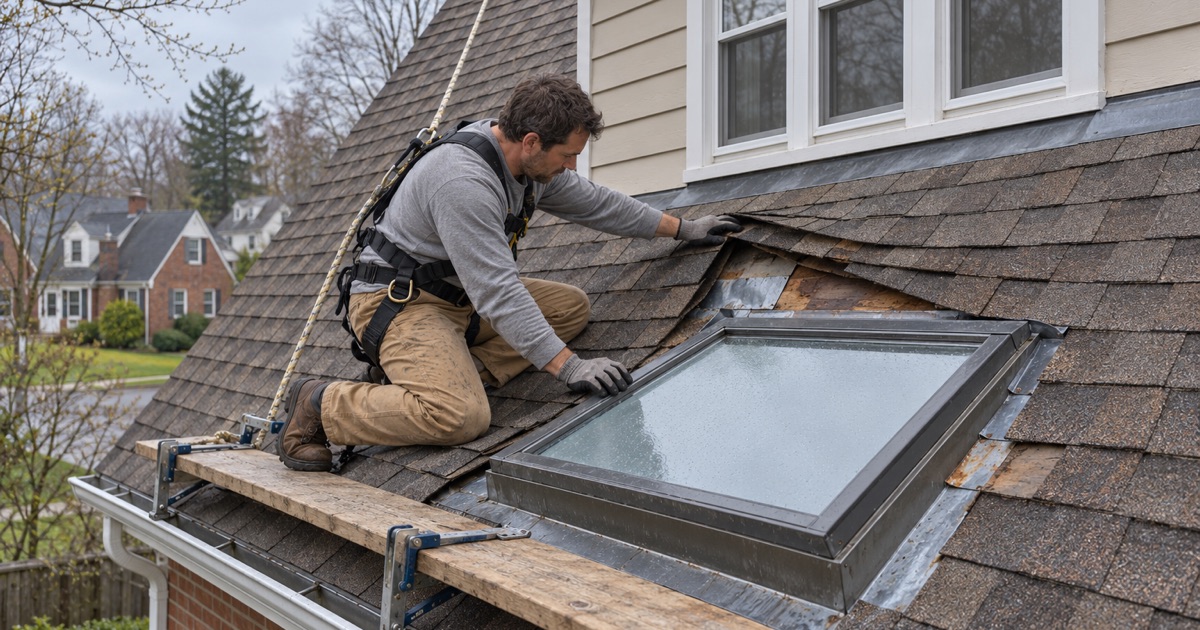
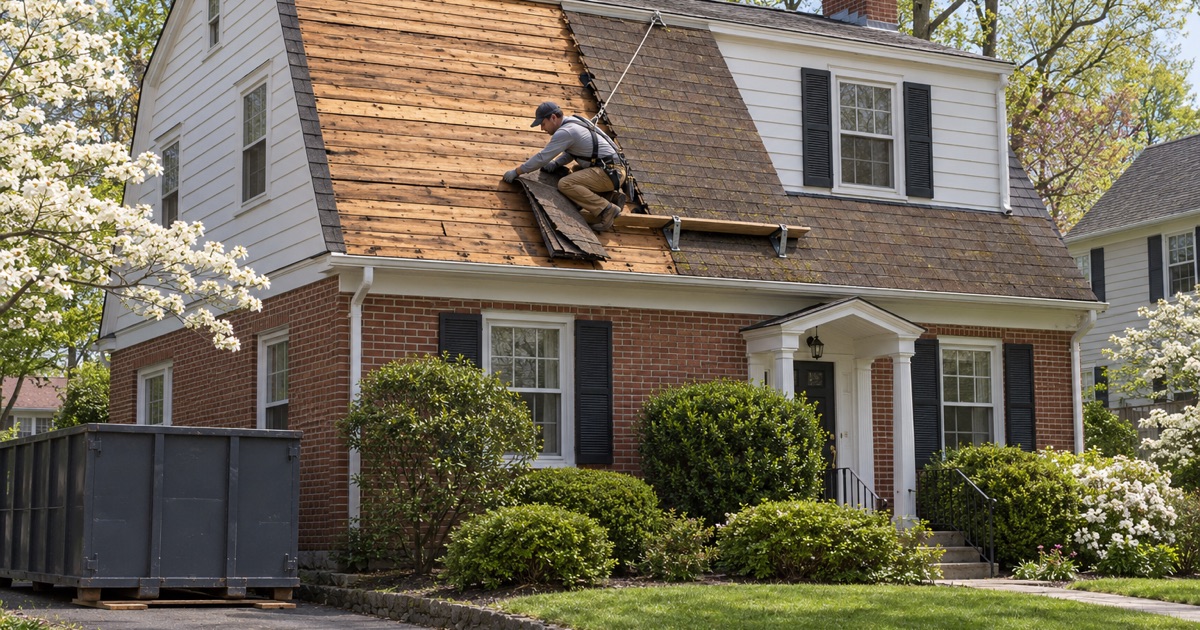
A tear-off starts with the dumpster and tarps over the plantings, then the old roofing comes off to the deck. We inspect the sheathing, replace bad sheets at the contract price, then install drip edge, ice barrier, ASTM D8257 synthetic underlayment, flashing and the new roofing in that order.
In Haverford a dumpster in the street needs a right-of-way occupancy permit, $80.00 for the first 24 hours and $10.00 for each day after, so we plan where the container goes beforehand. Every day ends with the yard, driveway and gutters cleaned and a magnet sweep for nails.
Prewar Stone and Brick House Roofs
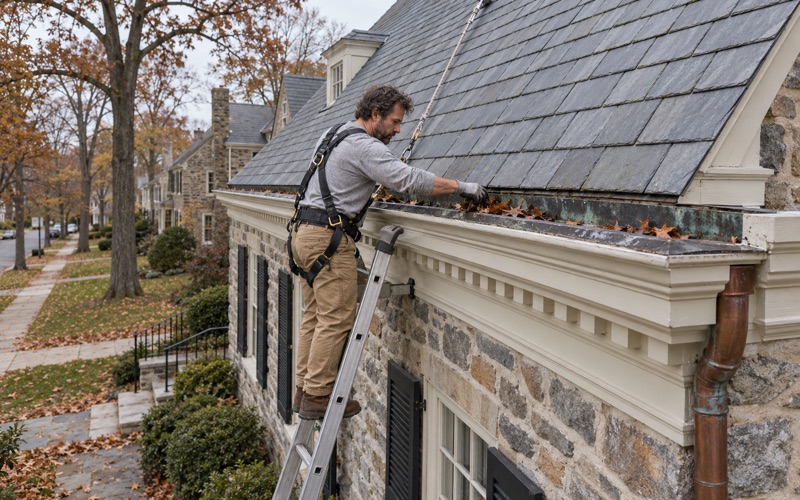
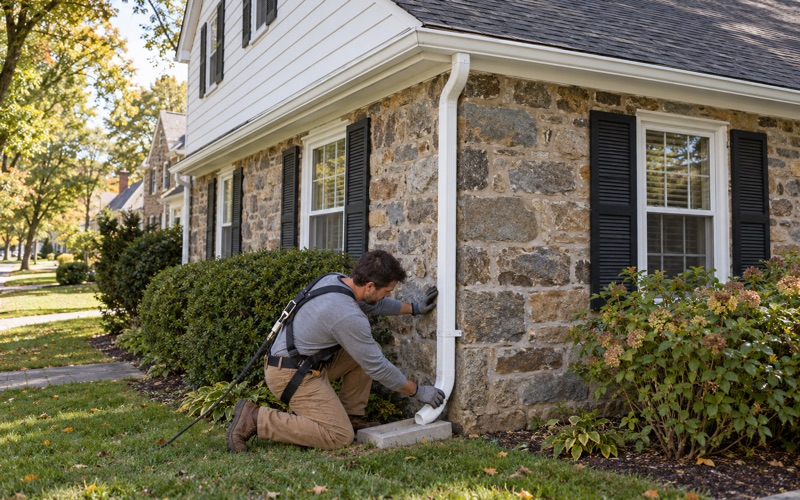
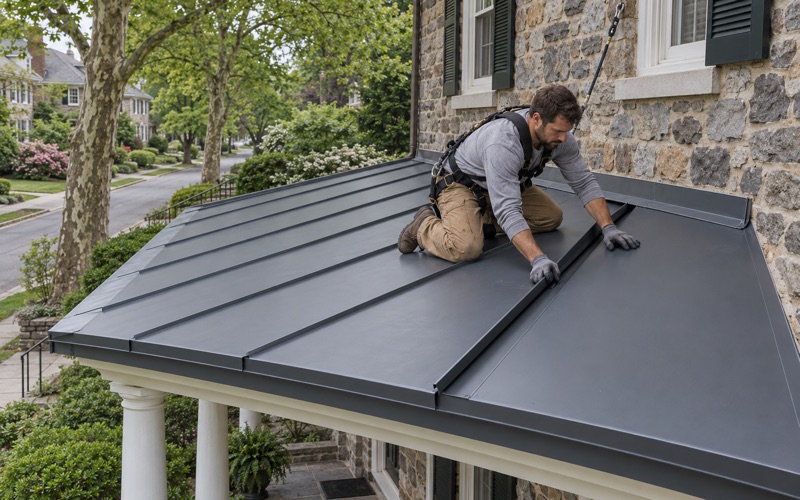
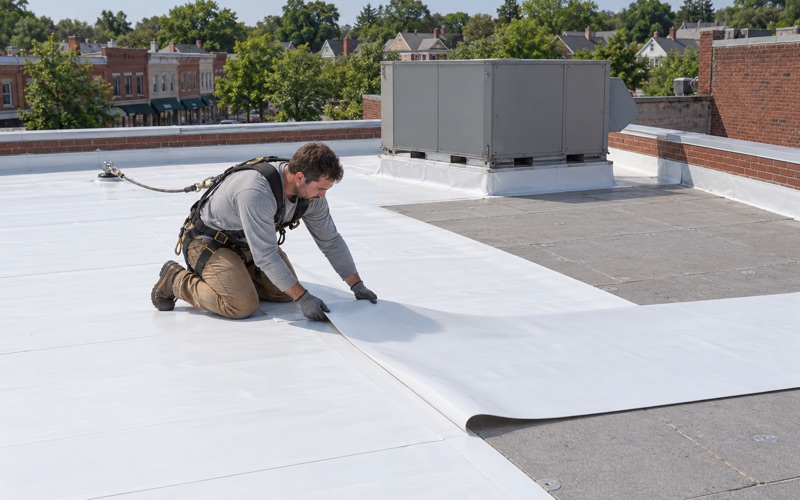
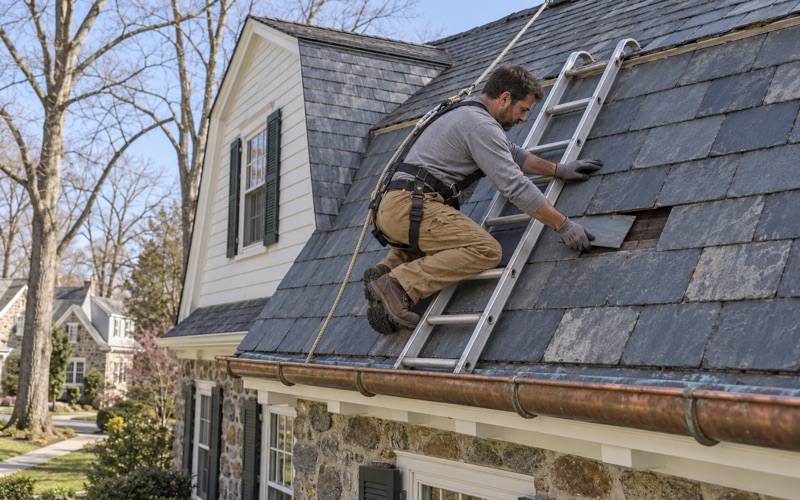
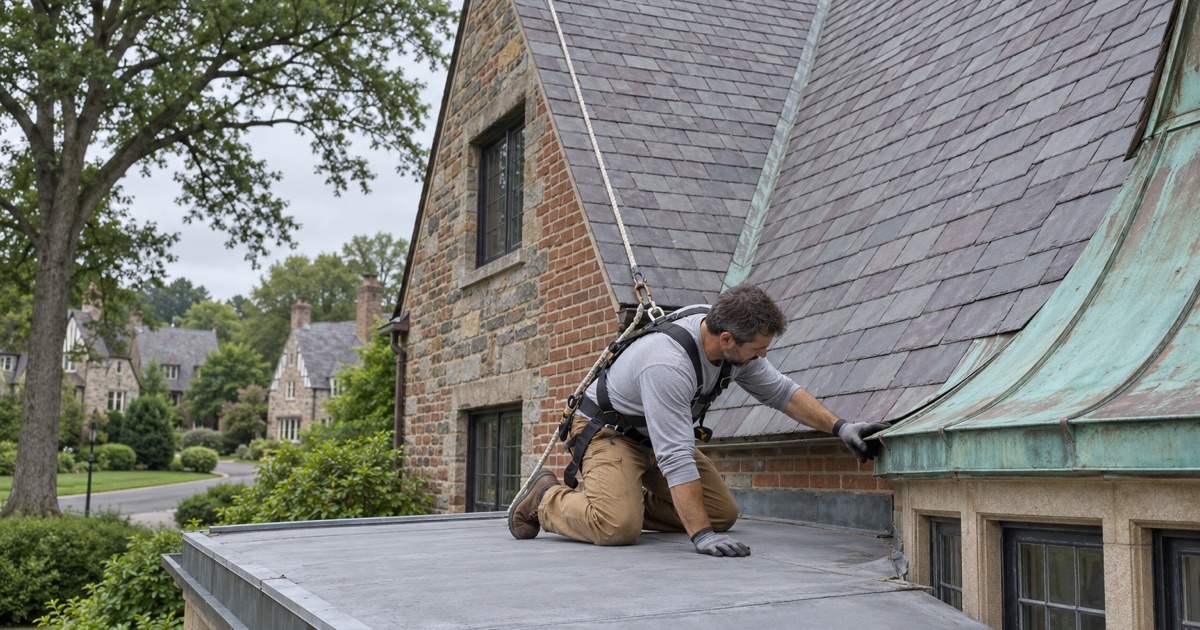
In Haverford Township 31.9% of the housing was built in 1939 or earlier and 74.5% before 1960, so many roofs sit on houses much older than anything on top of them. Those houses often keep original details: built-in gutters, copper valleys, slate on the main roof and metal or membrane on a porch.
We identify which details are original and still sound before the scope is written. A copper valley with years of life left should be worked around, not torn out because it was in the way.
Stone Colonials and Tudor Roofs
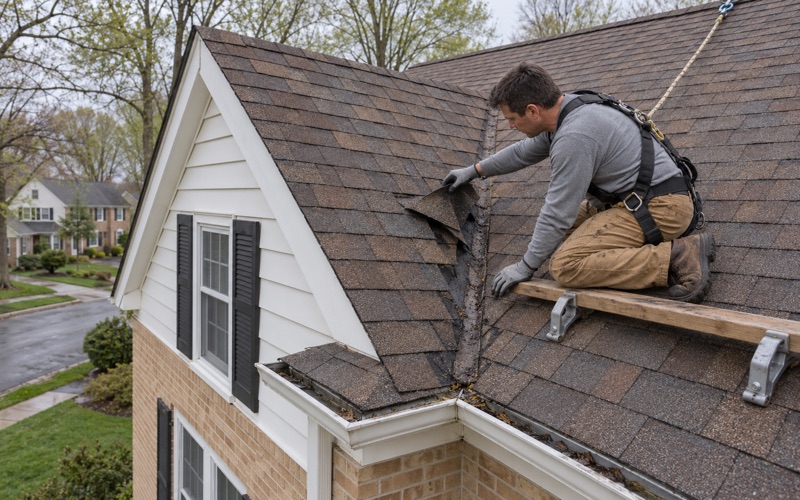
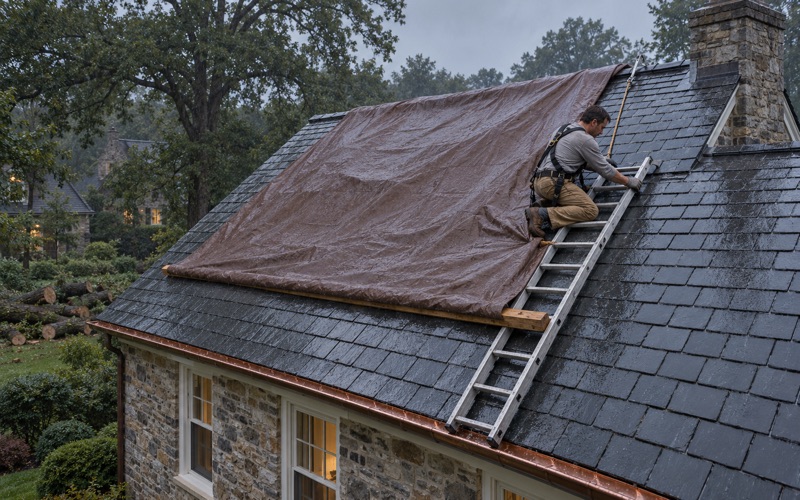
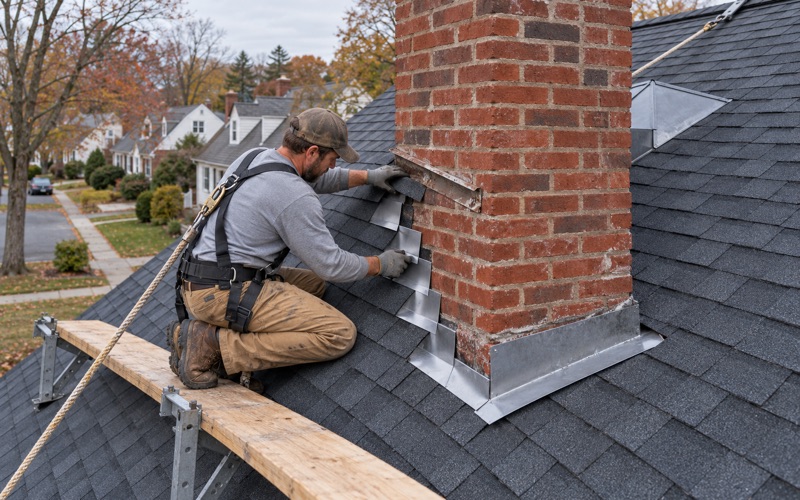
Steep Tudor gables, dormers and tall masonry chimneys make a roof with more flashing than open field. Every dormer cheek wall, valley and chimney is a seam where water can find a way in.
We step-flash every sidewall and build a cricket, or saddle, behind a wide chimney so water splits around it instead of pooling against the masonry. On steep pitches, fall protection and roof jacks are set before any material goes up.
Twin Home Roof Replacement
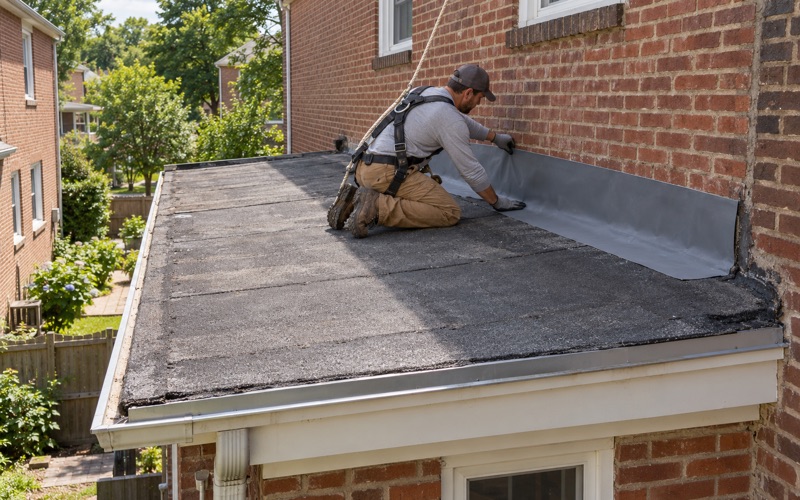
In Haverford Township 19.2% of homes are single-family attached, and many are twins sharing one roof across a party wall. Replacing one side means tying new material into the neighbor’s older roof at the line, where a careless seam leaks into both houses.
We plan that tie-in with the neighbor’s roof and the shared wall in mind, talk with the other owner where it helps, and flash the transition so either side can be replaced later without disturbing the other.
Choosing a Shingle Color
Color is easier to judge against the house than against a sample board. Gray stone, red brick and painted siding each pull a shingle color differently, and the trim and gutters shift it again.
We bring full-size samples of architectural shingles such as GAF Timberline HDZ, Owens Corning Duration or CertainTeed Landmark and hold them against the walls in daylight. On a twin, matching the neighbor’s side often settles the choice.
Attic Ventilation for a New Roof
A roof needs air moving beneath it, with intake at the soffits and exhaust at a ridge vent, sized by net free area. Haverford’s addendum asks how the attic is vented and cites 1 square foot of vent per 150 square feet, or per 300 with at least 50% of the venting in the upper third of the roof.
On older houses with no soffit vents, we work out an intake path before cutting a ridge vent, because exhaust without intake pulls conditioned air from the rooms below. Better airflow also helps with the ice dams described above.
Roof Replacement Under Solar Panels
A solar array has to come off before the roof under it can be replaced, then go back on and be reconnected. We put panel removal and reinstall into the schedule from the first visit, coordinated with the solar company, instead of finding out on tear-off day that nobody booked them.
If panels are still in the planning stage, we look at the age of the roof first. Mounting a new array on a roof near the end of its life means paying to remove and reinstall it far sooner than anyone planned.
Selling a House With an Older Roof
The Pennsylvania seller property disclosure statement asks about the roof, including known leaks, and a buyer’s inspector will walk it. A Haverford resale also needs a Use and Occupancy application filed at least 30 days before settlement, though the township checklist does not name the roof.
We give sellers a written condition report with photos and repair what should be repaired before listing. Settling a roof question before the buyer’s inspection keeps it from turning into a price negotiation.